/ Healthcare technology
SATUSEHAT Radiology Integration: Scope, Mapping, and a Readiness Checklist
A practical way to prepare radiology data integration with SATUSEHAT by separating scope, resource mapping, credentials, environments, monitoring, and facility responsibilities.
Radiology integration needs more than an API connection
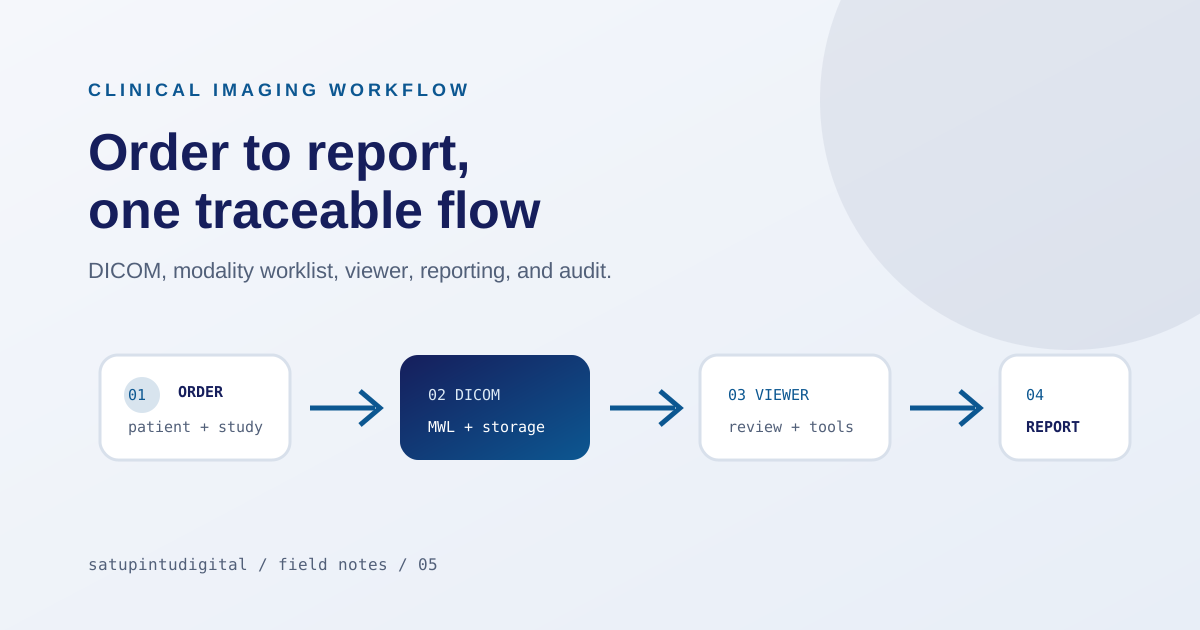
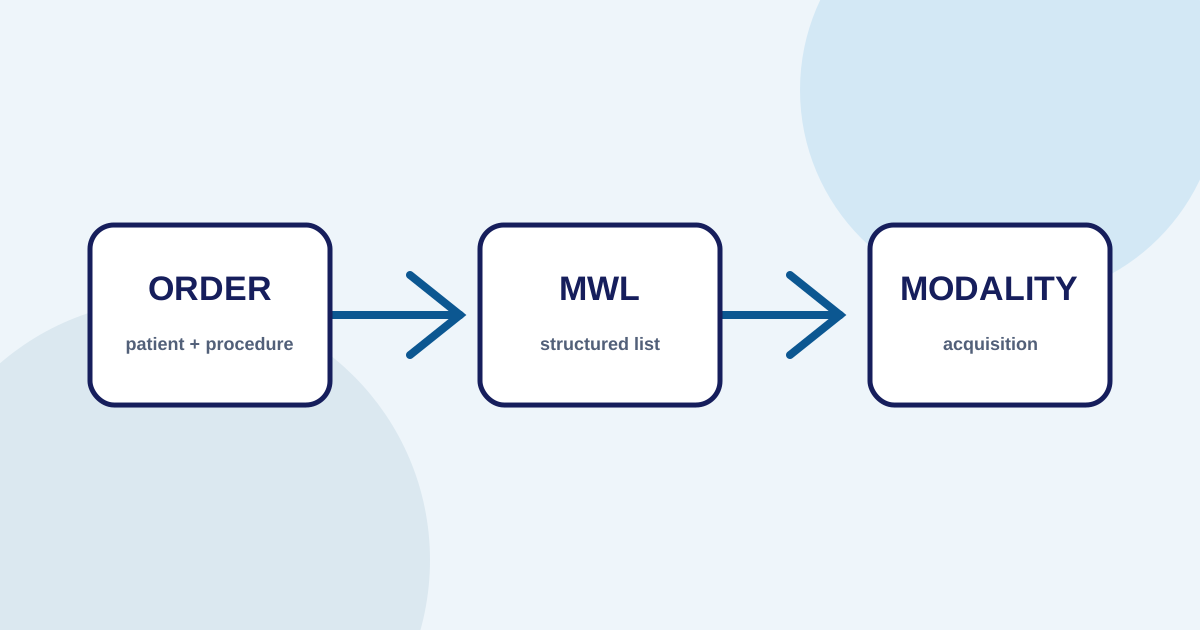
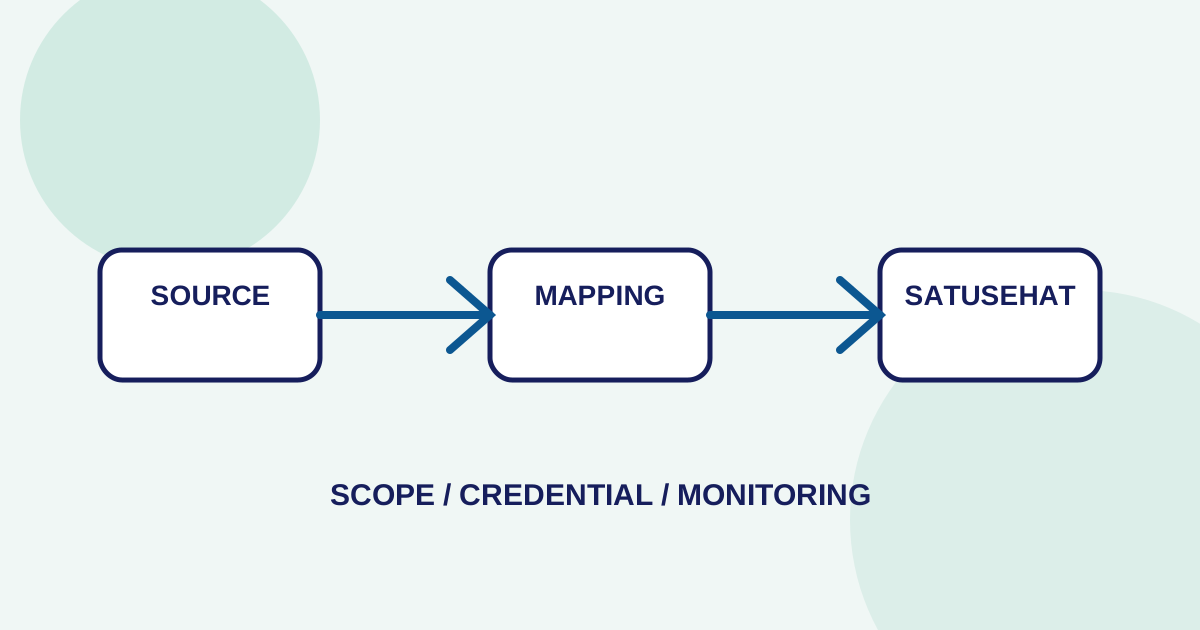
A radiology workflow produces data across several stages: patient registration, orders, examinations, DICOM studies, reports, and service states. When some of that data needs to be exchanged with SATUSEHAT, teams must determine what is sent, how relationships between resources are created, and who handles responses or errors.
The radiology PACS workflow article covers the path from order to report. This article narrows the focus to external integration readiness and does not replace the official SATUSEHAT documentation.
Start with scope, not assumptions
Write the scope in a testable form:
- what process triggers the exchange;
- which resources are used;
- which identifiers connect patient, order, study, and result;
- which data is required or optional;
- when a transaction is successful;
- how corrections and cancellations are represented;
- whether the system sends metadata, results, references, or another component.
“SATUSEHAT integrated” is too broad without scope. Operations teams should be able to explain the flow and success criteria through a testable example.
Make mappings readable to every role
Mapping should not live only in a technical configuration. Create documentation that administrators, radiology teams, integrators, and project owners can read. At minimum, explain:
- field source;
- transformation or normalization;
- target resource;
- identifier and references;
- behavior for missing or mismatched data;
- correction owner;
- approved example payload or state.
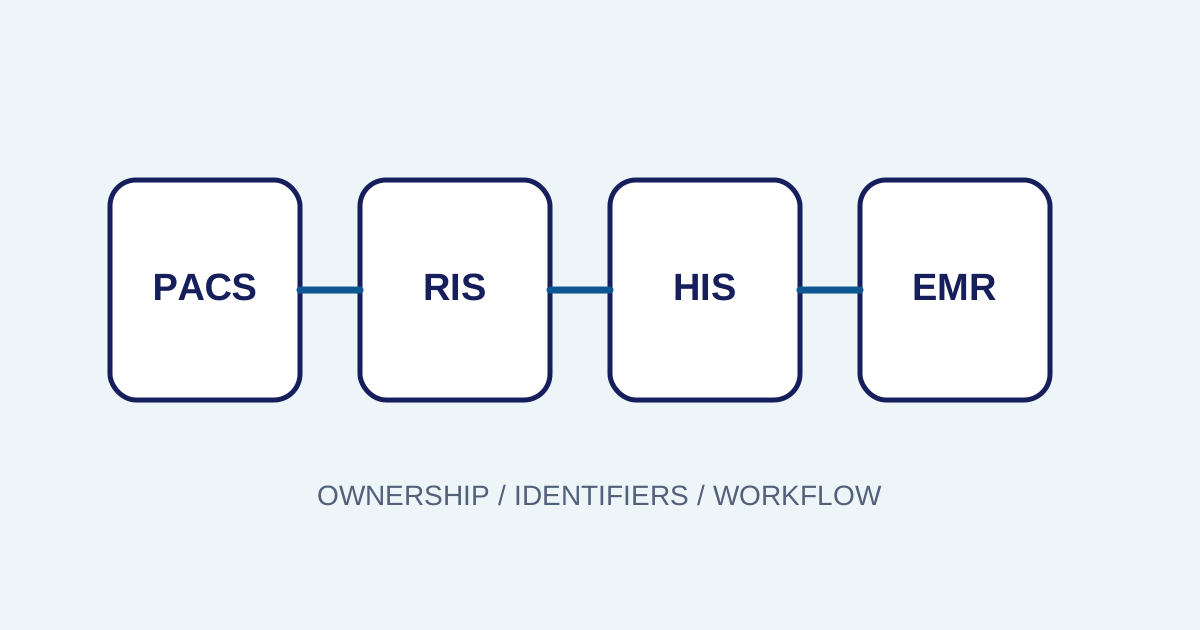
Relationships between patient, organization, practitioner, service request, imaging study, and report should be tested with representative operational data. Do not experiment with production patient data without the approved procedure and consent requirements.
Separate environments and credentials
Testing and production should have clearly separated credentials, endpoints, configuration, and data. Record who created a credential, when it expires, how it is rotated, and who can inspect logs.
Environment differences that commonly create confusion include:
- facility or organization identifiers;
- available resources;
- profiles or validation rules;
- rate or volume limits;
- access rules;
- reference data and mappings.
Test realistic scenarios
Normal scenarios matter, but they are not enough. Add incomplete data, mismatched identifiers, duplicates, cancellations, corrections, timeouts, rate-limit responses, and retries. For every case, decide whether it is retried, fixed manually, or escalated.
Use idempotency or status checks where available so retries do not create duplicates. Store a correlation ID, time, resource, state, and enough error context for investigation.
Monitoring must lead to action
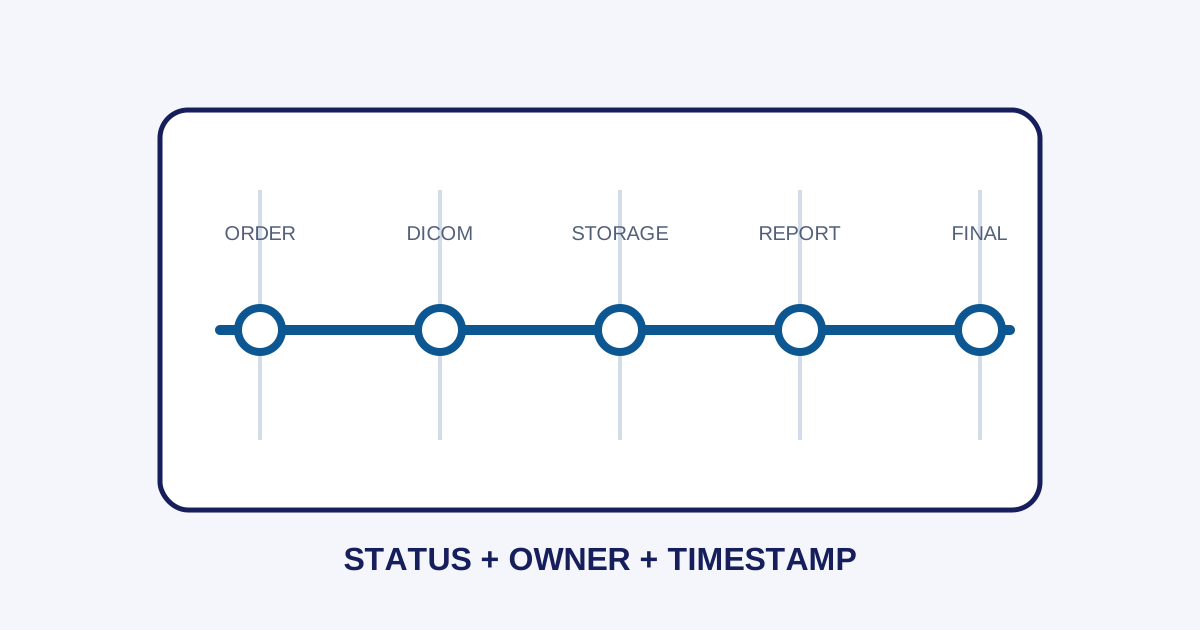
An integration dashboard should not only show a success count. Show states such as queued, processing, completed, rejected, retrying, and failed when those states match the system. Each failure state needs an owner and a first action.
Useful indicators can include time from final study to transaction, data held by mapping errors, repeated errors per resource, successful retries, and manual corrections. These signals help distinguish process, data, network, and external-system problems.
Relationship to the workflow platform
Imagestro-PACS places SATUSEHAT readiness and monitoring after orders, worklists, DICOM, review, and reporting. This mapping supports discussion, but the implementation scope still depends on the facility, HIS/SIMRS, credentials, and applicable requirements.
Conclusion
Radiology SATUSEHAT integration should start with scope, mappings, ownership, credentials, environments, and monitoring. An API that can be called does not mean the workflow is ready. Go-live criteria should include normal and failure scenarios, correction procedures, and clear responsibilities.
Need help applying these priorities to your business?
Content cluster