/ SME digitalization
Choosing the right digital stack for an SME
How to map online stores, customer communication, and finance without adding operational complexity.
Start with the customer flow
Healthy digitalization starts with workflows, not a list of applications. Before choosing software, write down the customer journey from discovery to delivery. Also record the owner’s work: answering questions, checking payments, updating stock, arranging shipping, and recording transactions. This map helps separate problems that need software from problems that only need a clearer procedure.
Separate the three operational foundations
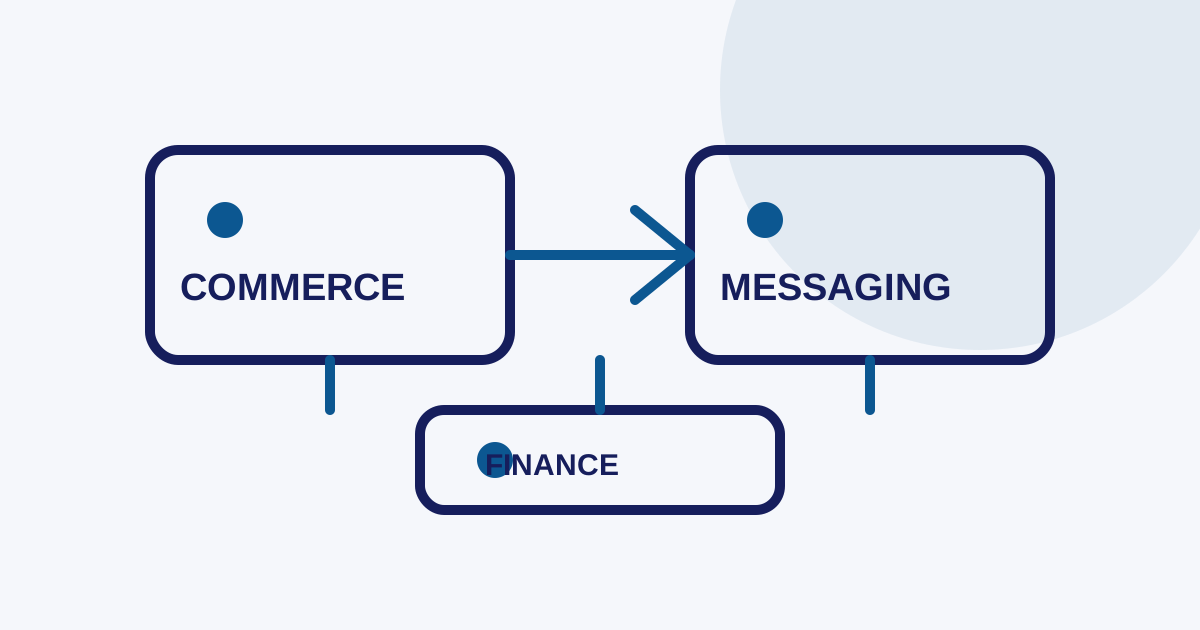
For many SMEs, three foundations appear repeatedly. A commerce channel handles catalog, checkout, inventory, payment, and shipping. A communication channel keeps customers and owners informed. A finance system turns transactions into records for reconciliation and decisions. They do not need to be installed at once, but responsibilities and data ownership should be designed early so the systems do not overlap accidentally.
An online store should reduce manual work
An online store is more than a catalog page. Its value appears when customers can search, choose variants, calculate shipping, complete checkout, and track an order without asking the same questions in chat. For owners, the dashboard should make pending verification, low stock, delayed payments, and unfinished work visible.
Make communication event-driven
New-order, payment, status, and shipping notifications should come from the correct system events. Avoid separate scripts that send different formats. A gateway such as Wavio can form one integration boundary for sending messages and receiving events. Store event status so the team can distinguish a created message from one sent, accepted by the gateway, delivered, or queued for retry.
Design financial records early
Financial data becomes useful when account mapping is agreed early. Define how sales, discounts, shipping, gateway fees, refunds, and taxes should be recorded. Automation reduces repeated entry, but it does not replace a finance review. Business rules should be validated with process owners before transactions become the official reporting source.
Start with one bottleneck
Choose one realistic success measure: reduce order-verification time, stop maintaining duplicate inventory spreadsheets, or give every transaction a reference number. Once the process is stable, measure time, errors, and complaints before adding another module. A staged approach lets the team learn from real usage rather than demo assumptions.
Assign ownership and fallbacks
Before launch, assign the people responsible for the catalog, payment approval, failed messages, and reporting. Define a temporary manual procedure for gateway, courier, or application downtime. Multi-tenancy becomes useful when store patterns repeat and isolation needs are clear; every tenant still needs separate access, domain, data, branding, and billing rules.
Prepare migration with a pilot
Before migration, map products, variants, inventory, customers, orders, accounts, and payment states. Back up the source, choose a pilot period, reconcile records, and ask users to test the most important flows. Separate must-have requirements from attractive demo features. Track processing time, inventory corrections, unreconciled transactions, and repeated customer questions.
Review the stack against real usage
A good digital stack feels simple because complexity is organized behind the scenes. Choose technology the team can explain, monitor, and grow with without locking the business into an unfamiliar process. Start small, document decisions, and review the stack once real usage data is available.
Need help applying these priorities to your business?
Keep reading